
They are two different bridges 800 metres apart. One is famous, one fell down (twice). Here’s the full comparison — and which one you’ve seen in every postcard.
⚠ Independent guide — not the official Tower Bridge website.
| Tower Bridge | London Bridge | |
|---|---|---|
| Famous for | Two iconic towers, blue suspension cables | Being functional and unremarkable |
| Opened | 1894 | 1973 (current bridge) |
| Style | Victorian Gothic suspension/bascule | Modern concrete cantilever |
| Length | 244 metres | 269 metres |
| Can you visit inside? | Yes — walkways, glass floor, exhibition | No paid attraction |
| The one that “fell down” | Never has | Multiple times in history |
| The one in postcards | Tower Bridge — always | Rarely |
Most first-time visitors arrive in London certain they know what London Bridge looks like — twin towers, a drawbridge, that lift-up middle bit. They don’t. That’s Tower Bridge.
London Bridge is the plain concrete bridge 800 metres upstream. It carries the A3 road, it has no towers, no decorative ironwork, no lifting bascules. Most tourists walk over it and don’t realise.
The confusion is so common that the City of London Corporation has, more than once, had to publicly clarify which is which. The pop song “London Bridge Is Falling Down” doesn’t describe Tower Bridge at all — Tower Bridge has never fallen.
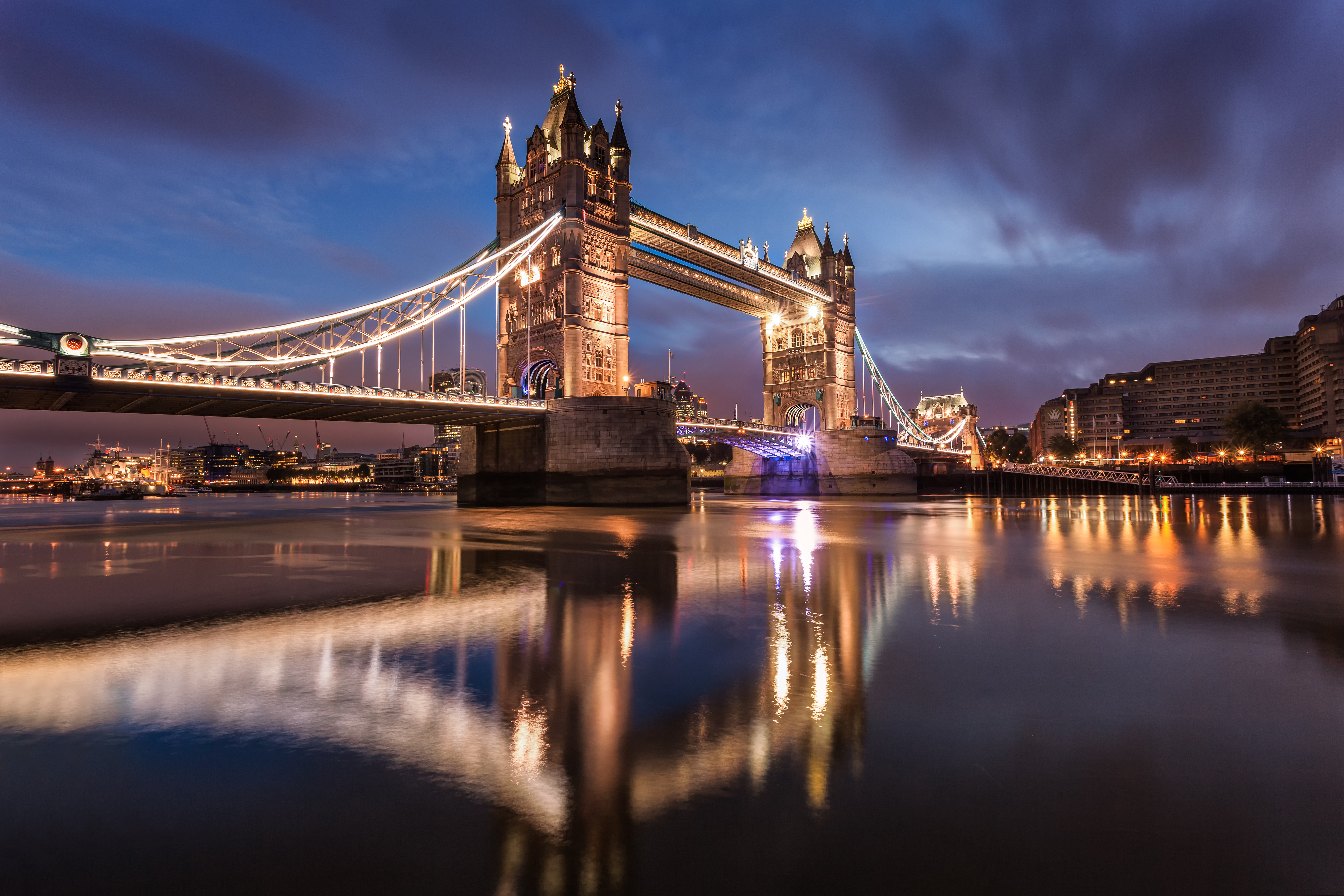
A combined bascule and suspension bridge opened in 1894 to ease traffic east of London Bridge while allowing tall ships to continue upriver. The two towers, the high-level walkways and the bascules are the original Victorian structure; the colour scheme has changed several times (red, white, blue and white now).
Yes — the Tower Bridge Exhibition includes both walkways, the glass floor and the Engine Rooms. Adult admission is £13.40 online. See our tickets price guide or walkway page.
A modern concrete cantilever bridge opened in 1973, carrying the A3 road between the City of London on the north and Southwark on the south. It’s 269 metres long, three lanes each way, with broad pavements.
The current bridge is the third (or fourth, depending how you count) to occupy roughly the same alignment. It is deliberately plain — engineered for traffic flow rather than spectacle. Most visitors walk straight across it without realising what it is.
You can walk across it for free, but there’s no paid attraction. The closest thing to a visitor experience is the London Bridge Experience and Tombs (located in the vaults of the bridge’s northern approach), which is a separately ticketed scare attraction.
“London Bridge is falling down” refers to a long, eventful history of bridges in this position. Here are the main ones:
The Arizona sale gave rise to the persistent urban legend that the buyer thought he was buying Tower Bridge. The buyer always denied it — he knew exactly which bridge he’d bought. But the legend stuck because it captures something real about how outsiders picture “London Bridge”.
Just in case the confusion goes deeper — these are the other major central Thames bridges, west to east:
For paid visiting: Tower Bridge, every time. It has the walkways, the glass floor, the Engine Rooms and the iconic profile.
For walking across (free): both. Walk Tower Bridge for the views west to The Shard and east to Canary Wharf. Walk London Bridge if you’re heading from the City to Borough Market or The Shard.
The optimal walk-and-see route: cross London Bridge southbound (for the upstream view), walk east along the south bank past HMS Belfast, then cross Tower Bridge northbound. You see both, you photograph both, and you understand the geography forever.
For completeness — the bridges appear in different cultural contexts:
Tower Bridge — the one with the two towers, the blue suspension cables and the lifting bascules.
London Bridge (the historical versions). Tower Bridge has never fallen.
About 800 metres along the river. A 10-minute walk.
No. It was opened in 1973. The medieval bridge stood for 622 years (1209–1831) and the Victorian stone one (1831–1968) was sold to Arizona.
You can walk across it for free, but there’s no paid attraction inside London Bridge itself. The visitor experience is at Tower Bridge.
The buyer always denied it. He bought the 1831 stone London Bridge knowingly, reassembling it in Arizona, where it remains.