
42 metres above the Thames, two parallel walkways link the bridge’s towers. Here’s what you actually see, how long it takes, what the views show and which side is worth lingering on.
⚠ Independent guide — not the official Tower Bridge website.
| Height above road | 33 metres |
| Height above Thames at high tide | 42 metres |
| Length of each walkway | 61 metres |
| Glass floor sections | 2 × 11 metres long |
| Time to walk both | 5 mins fast / 20–30 mins normal |
| Walkway ticket price | Included in £13.40 adult admission |
| Step-free access | Yes — lift in north tower |
When Tower Bridge opened in 1894, the two high-level walkways were practical. The bascules — the road sections — split open up to 50 times a day to let tall ships through, and pedestrians needed a way across that didn’t involve waiting. The towers carried two enclosed walkways at the top.
Then Londoners stopped using them. Within a decade, the upper level had become better known for pickpockets and other characters than for crossings, and the walkways closed to the public in 1910. They stayed shut for 72 years.
They reopened in 1982 as the Tower Bridge Exhibition. Today you’re walking the same Victorian iron-and-glass enclosures, only with reinforced floors, panoramic windows and — since 2014 — two glass floor sections looking straight down onto the road below.
The two walkways face different directions, and the views are deliberately complementary.
Looks downstream toward Canary Wharf, the O2 dome and the wider Thames Estuary. On clear days you can see right out past the Thames Barrier. The east-facing windows catch direct morning light, so for the cleanest photo of the river, visit before 11:00.
Looks upstream past HMS Belfast toward The Shard, the Walkie Talkie, City Hall and the western City skyline. The Shard fills more of the frame than most people expect — it sits unusually close. Late afternoon is when this side glows in golden light; my pick for a single-window photo on a sunny day.
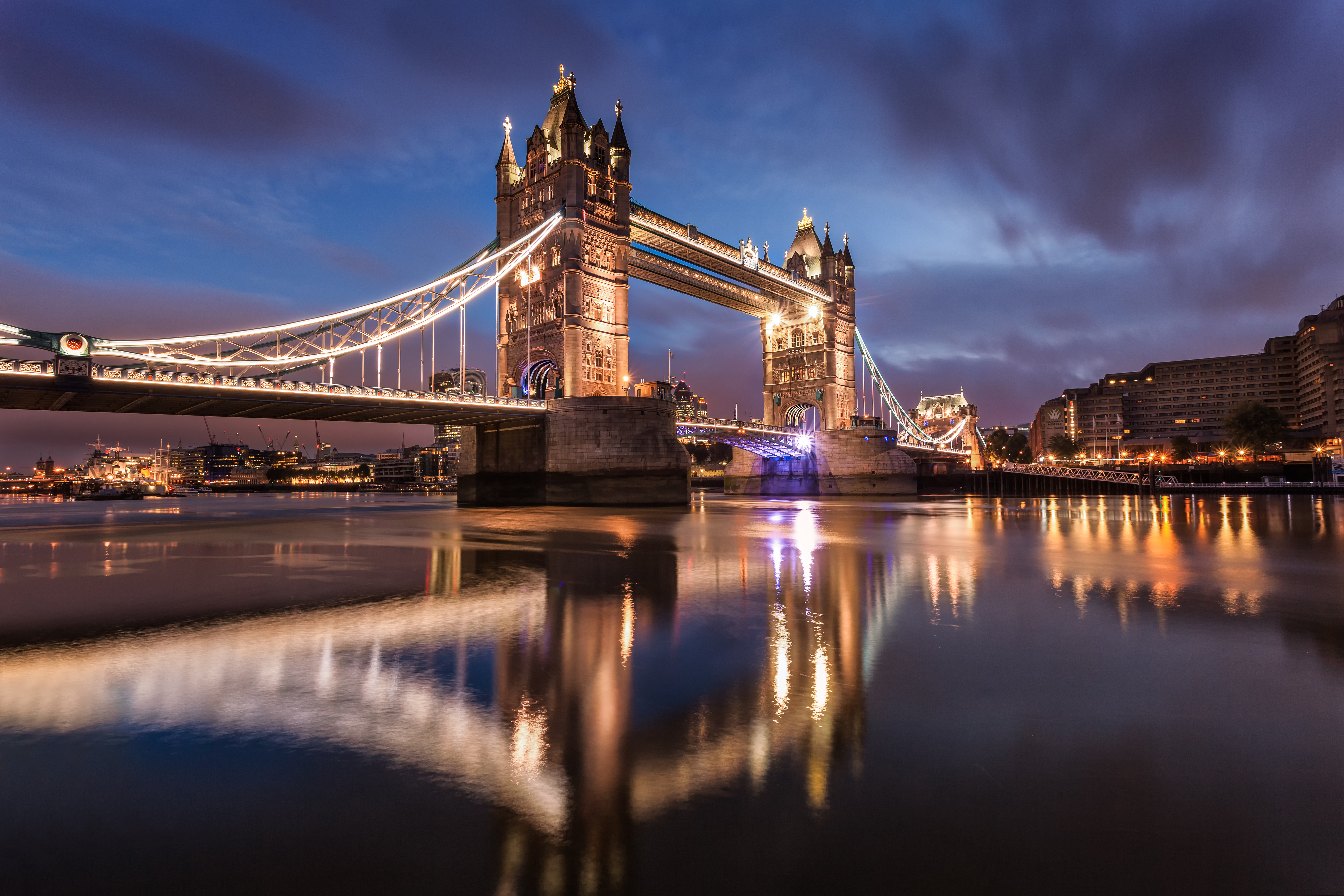
The walking itself is brief — each walkway is about 61 metres long, so you’re past the glass floor within a couple of minutes. What stretches the visit is stopping. Most people pause for photos at every window. A realistic budget is 20–30 minutes for both walkways, plus 5 minutes in the lifts.
If you want to wait for a bridge lift to happen while you’re on the walkways, add 10–20 minutes depending on the published schedule. Watching the bascules rise from above is one of the rarest perspectives in London.
The walkways are fully enclosed and heated. Rain doesn’t change the experience aside from making the windows streak — easily ignored. Heavy fog is the only real visibility killer; on those days the east view of Canary Wharf can disappear entirely, and you’re left with a moody atmospheric photo of the bridge’s own ironwork. Some visitors prefer it.
Each walkway has an 11-metre glass-floor section in the middle. You stand directly above the road and can watch buses, cars and pedestrians pass below. The glass is 68mm thick laminated structural glass — strong enough that staff occasionally walk maintenance carts across it.
For dedicated photo tips and the busiest times, see our glass floor guide.
Both walkways are step-free. A lift from the entrance hall takes you to the upper level; a separate lift in the south tower comes back down. Wheelchair and pushchair users go through the same route as everyone else, and the walkway is wide enough (~2.4 metres) for two wheelchairs to pass each other comfortably.
Visitors with hearing loss can borrow a hearing loop receiver at the entrance. Audio guide tracks include described descriptions of the views, useful for visually impaired visitors.
The walkways have a soft capacity of about 200 people at once. On a peak Saturday in July, that means 5–10 minute waits to step onto the glass floor and visible bottlenecks at the south tower landing. In practical terms, the loop becomes more of a 35–45 minute experience.
Off-peak — Tuesday afternoon in February, for example — you’ll routinely have the entire south walkway to yourself for minutes at a time. The light is also better at this time of year because the sun sits lower in the west-facing windows.
Every Tower Bridge admission ticket includes both walkways. There is no “walkway-only” ticket — the £13.40 adult fare covers the walkways, both glass-floor sections, the exhibition panels and the Engine Rooms together.
See our tickets and price page for the full breakdown.
Tripods are technically not permitted (the walkways are narrow and other visitors need to pass), but handheld photography of any kind is welcome, including video. The windows have a slight blue tint from the laminated glass — easily corrected in editing. For the cleanest shots:
Mounted along the walkway walls is a rolling exhibition covering bridge history, Victorian engineering, famous bridge crossings (Tower Bridge has hosted everything from Suffragette demonstrations to Olympic torch handovers) and a tactile model of the bascules in motion. None of it requires reading to enjoy — the visuals do most of the work — but the captions are good if you want them.
Tower Bridge’s walkways sit between two of London’s other paid-view experiences:
Of the four, Tower Bridge has the lowest viewpoint and arguably the most photogenic because the bridge itself frames the view. The other three offer higher angles but flatter compositions.
No. The walkways are included in the standard Tower Bridge admission.
33 metres above the road, 42 metres above the Thames at high tide.
Yes. You can stay on the walkway and watch the bascules rise from above.
Yes — both walkways are step-free and buggies are welcome.
The walkways are fully enclosed and most visitors don’t register them as high up. The glass-floor section is more confronting; you can walk around it on the non-glass side of the floor.
Yes — the road and footways below are free. Only the high-level walkways and exhibition need a ticket.